Why Orajel Doesn't Heal Your Canker Sore (And the 60-Second Red Light Routine People Use Instead)
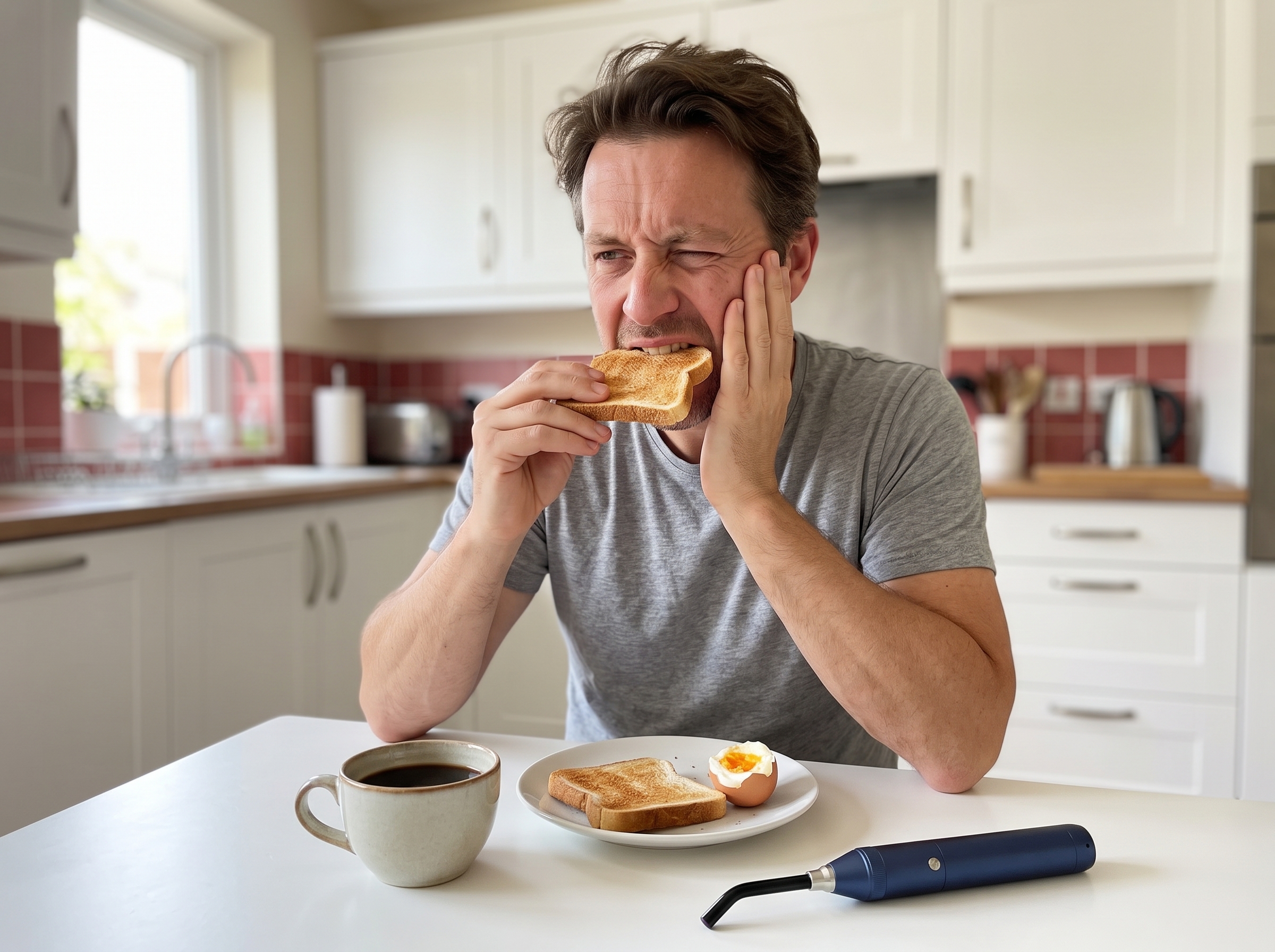
You know the scene. Your kid pushes the plate away, finger on the lower lip. Or it's you, chewing on one side for days because of one tiny white spot that makes every bite, every sip of orange juice and every word hurt like a paper cut.
Most canker sores go away on their own in one to two weeks, says Mayo Clinic. That's one to two weeks of pain when eating or talking. And what do most of us do? Reach for a numbing gel.
Numbing gels, salt water and patches treat the pain for minutes. The sore stays.
Benzocaine gels (Orajel, Anbesol) numb the spot for a short while. Then the numbness wears off, and the sore is exactly where it was.
And for little kids there's a real warning: in 2018 the FDA told parents not to use benzocaine teething and mouth products in children under 2, because of a rare but serious blood condition called methemoglobinemia.
Salt water stings. Patches fall off when you eat. So you wait it out.
- Numb for a few minutes — then it hurts again at the next meal
- Salt water rinses sting, kids cry and spit it out
- Benzocaine: FDA warning for kids under 2
- Still 1–2 weeks of pain while it heals by itself
"The treatment itself is very soothing and the light is so very slightly warm."Customer review of a red-light canker sore device (via cankershield.com roundup)
"The smaller sores barely bothered me after 1 day... no longer painful."Customer review of a red-light canker sore device (via cankershield.com roundup)
Gel vs. red light: what actually changes
| Numbing gel | Red light pen | |
|---|---|---|
| What it does | Numbs the surface | Light aimed at the sore itself |
| Taste | Bitter, numb tongue | None — nothing in the mouth but light |
| Kids | Benzocaine: FDA warning under 2 | No drug, no chemicals |
| Each sore | New tube, reapply all day | 60 seconds, rechargeable |
The dental-office trick that went handheld: red light
Dentists have used low-level light (photobiomodulation) on mouth sores for years. It doesn't numb anything. The light is aimed at the sore itself.
In one controlled study, sores treated with a low-level laser healed fully in about 3 days instead of about 9, and pain dropped sharply. A 2024 review of 21 trials (810 patients) found light therapy lowered pain right after treatment and over the next 1–3 days.
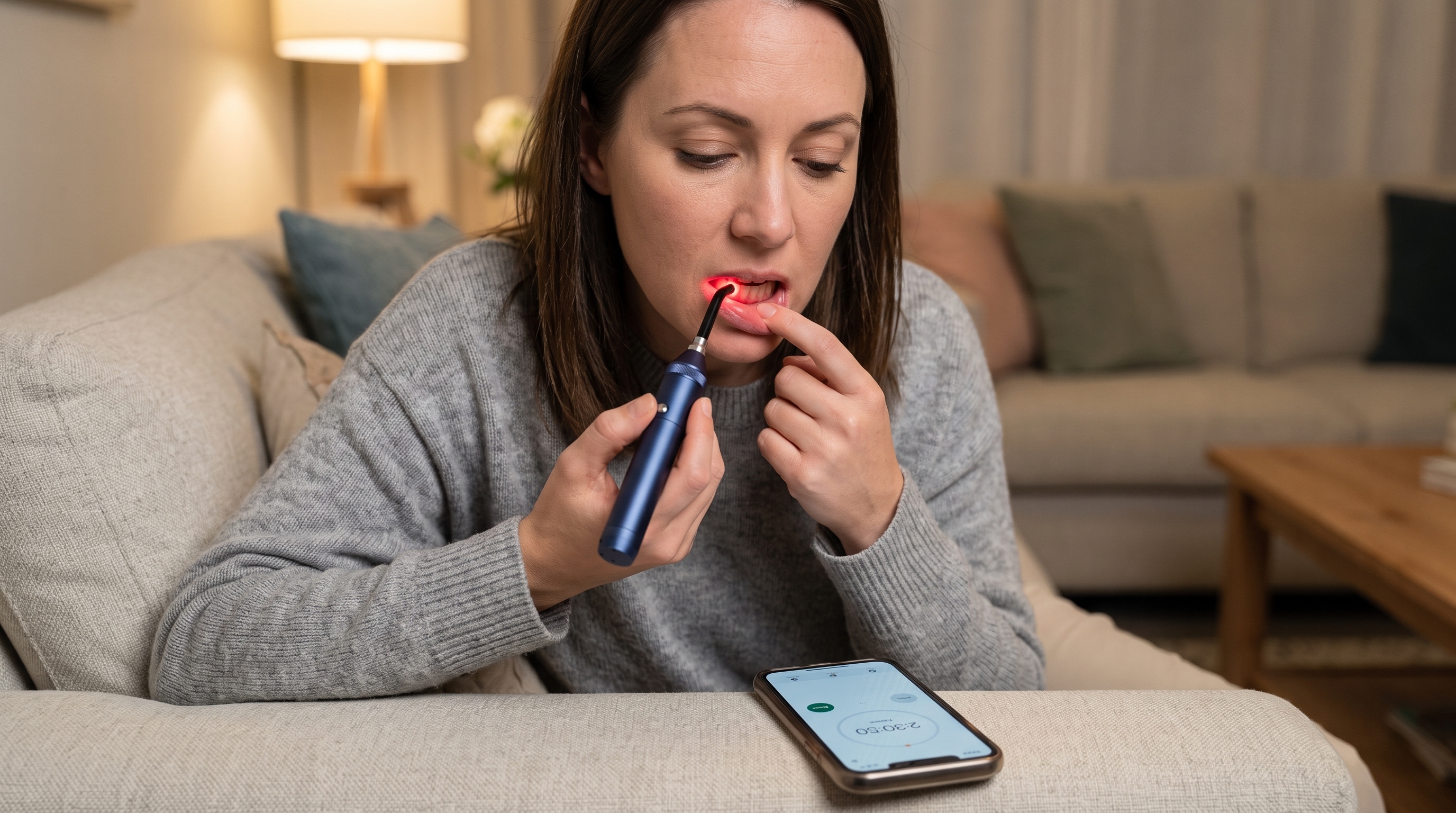
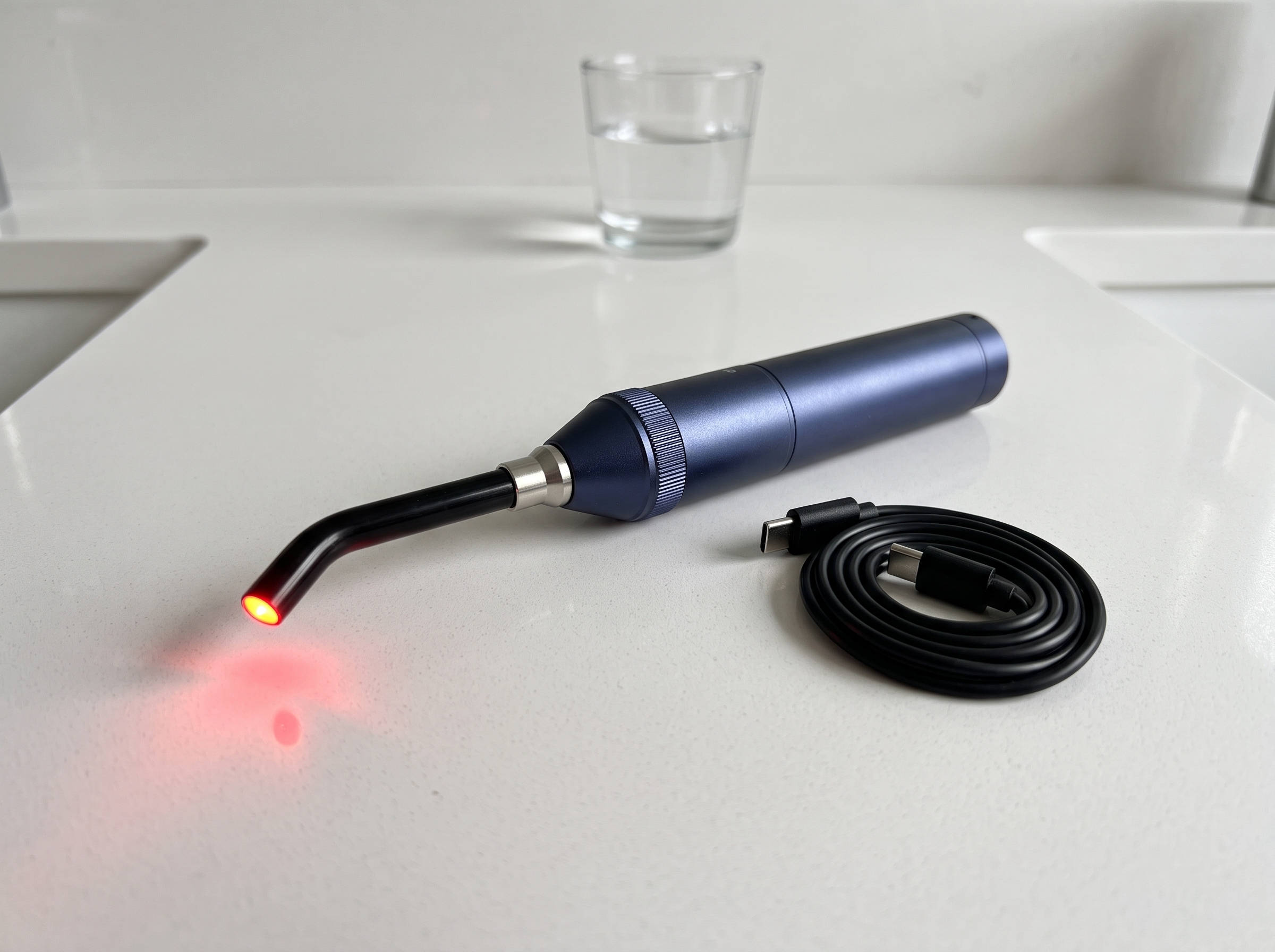
Honest note: those studies used clinical lasers, and results vary (one small study found no benefit). Handheld red-light pens use the same idea at home: hold the tip at the sore for about 60 seconds, a few times a day.
- No drug, no taste, no stinging
- 60 seconds, about 3 times a day
- Bent tip reaches inside the lip and cheek
- Rechargeable — your own personal pen
- A fraction of the price of $250+ clinic-brand devices
What families say changes
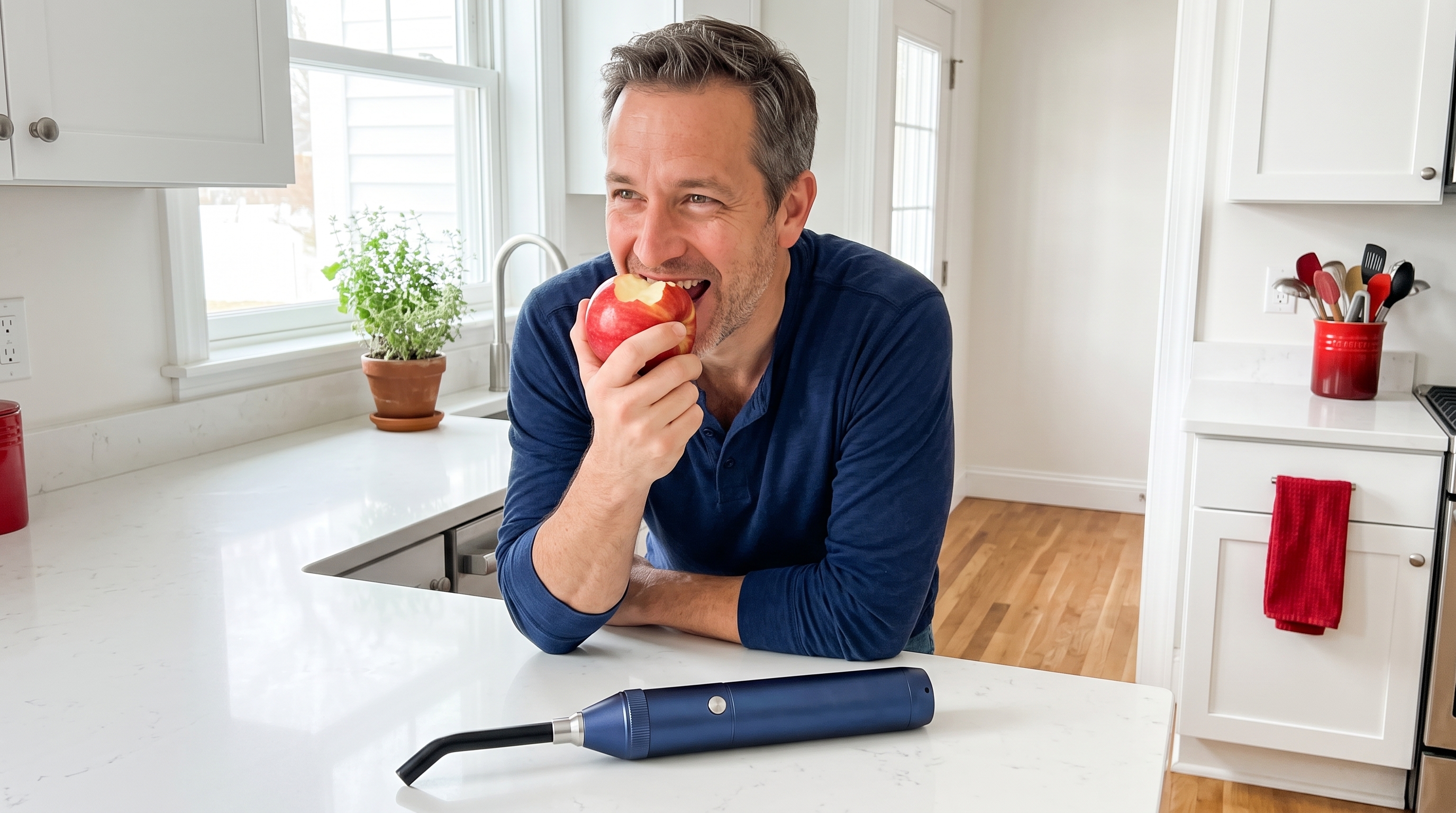
Dinner gets eaten again. Instead of a week of "it hurts", you do 60 seconds with the pen after brushing, and again later in the day.
Reviewers of red-light mouth devices say the healing process was noticeably quicker. Not everyone sees a difference — one reviewer used it every day for a week and did not notice any advantage — which is why we give you 30 days to try it.
Questions parents ask
Is it safe for kids?
It uses light only — no drug in the mouth. An adult should hold the pen for a child, and never shine it into the eyes.
How long and how often?
About 60 seconds per sore, up to 3 times a day, at least a few hours apart.
Does it work on cold sores too?
Red light is also used on cold sores on the lip.
Will it heal every sore?
No device can promise that. Studies show less pain and, in some trials, faster healing. You have 30 days to try it.
What if it doesn't help?
30-day money-back guarantee.
Get your SootheLight
1 pen$59.992 pens · MOST POPULAR$99.9930-day money-back guarantee
Tracked US delivery in 5–8 business days
Canker sores come back — stress, a bitten cheek, a cold. Having the pen in the drawer before the next one is the whole point. Launch stock is limited.
See the Price »